Source Self Starting Fixed Diesel Generator for Industrial Sites
Find a self starting fixed diesel generator from 30 verified listings. Compare AC three-phase models with water or air cooling, brushless alternators, and micro-computer control systems for standby, emergency, and common unit applications across global markets; compare the available evidence and request quotations based on your requirements.
Key considerations
Products List


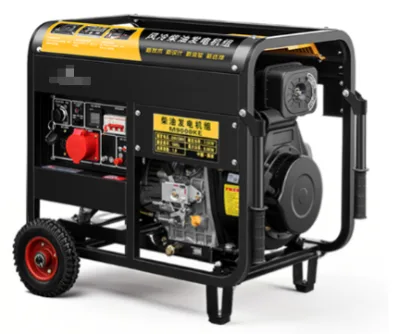


$28000.00 - $32000.00
Moq: 1


Comprehensive Sourcing Guide
Self Starting Fixed Diesel Generator Sourcing Guide
Procurement professionals must first distinguish between trailer-mounted and fixed installation units, as the supplied data indicates a clear split in product conditions of use. While some listings explicitly mention trailer types for mobile applications, the core keyword requires a focus on fixed installation methods suitable for permanent power infrastructure. Buyers should verify that the selected unit matches the intended land use, whether for common units, standby power, or emergency crew support, to ensure the physical mounting and foundation requirements align with the site's structural capabilities.
The observed market signals reveal a diverse range of power outputs, from compact 10kW models to heavy-duty 100kW and larger industrial sets. This variation necessitates a precise assessment of the facility's load profile before selecting a specific model, as the difference between a 10kW residential backup and a 100kW commercial standby unit dictates the entire system architecture. Buyers must cross-reference the rated power and current specifications against their peak demand to avoid under-sizing the generator, which could lead to failure during critical outages, or over-sizing, which results in inefficient fuel consumption and unnecessary capital expenditure.
Product Scope and Observed Listing Signals
The product scope encompasses a wide spectrum of diesel generator configurations, including open, silent, and trailer types, though the fixed installation requirement narrows the focus to stationary units. Listings frequently highlight customization availability, allowing buyers to tailor the enclosure and control systems to specific site constraints. However, the presence of both water-cooled and air-cooled variants in the data suggests that thermal management strategies vary significantly by model, requiring careful selection based on the ambient operating environment and the specific cooling infrastructure available at the installation site.
Observed listing signals indicate that manufacturers offer multiple engine origins, including domestic Chinese production and imported German engines, which directly impacts performance expectations and maintenance protocols. The data shows specific model series like the 75Kw ShangChai and various AL-PT series, demonstrating that buyers will encounter distinct branding and technical lineages within the same category. It is crucial to treat these model identifiers as specific observations rather than universal standards, ensuring that the procurement team verifies the exact engine and alternator combination for each potential supplier to confirm compatibility with the project's technical requirements.
Technical Specifications to Verify
Buyers must rigorously verify the electrical output parameters, specifically the rated voltage and frequency, to ensure seamless integration with existing facility infrastructure. The data confirms that units are available with rated voltages ranging from 208V to 480V and frequencies of 50Hz or 60Hz, but these are not universal defaults. Procurement teams should explicitly confirm the phase configuration, noting that three-phase four-wire systems are standard, and validate the rated current against the connected load to prevent overloading the alternator, which is typically brushless and AC in these configurations.
Thermal and mechanical specifications are equally critical, with the data highlighting both four-stroke engines and varying cooling methods such as water and air cooling. The rated speed of 1500rpm or 1800rpm is a key indicator of the generator's frequency stability and must match the grid or load requirements precisely. Additionally, the insulation class H and protection rating IP23 provide a baseline for durability, but buyers should verify that these ratings are sufficient for the specific environmental conditions of the installation site, such as humidity, dust levels, or temperature extremes, to ensure long-term operational reliability.
Compliance and Safety Documentation
Safety documentation must address the excitation mode and control systems, as the data specifies AC rotating exciter and auto/manual controller options. These components are vital for the safe synchronization and operation of the generator, particularly in emergency scenarios where automatic starting is required. Buyers should request detailed schematics and safety manuals that explain the interaction between the micro-computer control system and the engine, ensuring that the automatic start sequence functions reliably without manual intervention during a power failure.
Environmental and physical compliance is another area requiring strict verification, as the data lists specific packing standards and dimensional standards for certain models. While some units are packed in plastic film and others in reinforced plastic film, the physical dimensions provided, such as 250010001300mm, serve as critical data for logistics and site planning. Procurement teams must ensure that the supplier provides documentation confirming that the unit's dimensions and weight comply with local building codes and transportation regulations, especially for fixed installations that may require special permits for heavy machinery placement.
Cost Drivers and Commercial Terms
The cost of a self-starting fixed diesel generator is heavily influenced by the engine origin and the level of customization required. The data indicates that engines can originate from China or Germany, and this distinction often correlates with significant price differences in the observed range of 257 to 100,000 USD. Buyers should understand that higher-priced units typically offer superior engine reliability and longer service life, while lower-cost options may rely on domestic manufacturing with different performance characteristics, necessitating a clear cost-benefit analysis based on the criticality of the power supply.
Commercial terms regarding minimum order quantities and packaging are also key cost drivers, with observed MOQs ranging from 1 to 10 units. The standard packaging, whether plastic film or reinforced plastic film, is often included in the base price, but any additional customization or special packaging requirements will likely incur extra charges. Procurement professionals should negotiate these terms early, clarifying whether the price includes the controller, alternator, and base frame, and ensuring that the total landed cost accounts for all necessary accessories to achieve a fully functional fixed installation.
Supplier Qualification and Quality Control
Supplier qualification should focus on the manufacturer's ability to provide consistent product models and origins, as the data shows a mix of Fujian, Weifang, and general China origins alongside German engine components. Buyers must verify that the supplier has a proven track record of assembling these specific models, such as the Ald-C50s or AL-PT2V10, and can demonstrate quality control processes that ensure the final product matches the advertised specifications. This includes checking for consistent production of the rated power and current values across different batches to avoid receiving units that deviate from the agreed technical parameters.
Quality control protocols must extend to the final assembly and testing of the generator set, particularly regarding the insulation class and protection ratings. Since the data lists specific standards like Class H insulation and IP23 protection, buyers should request test reports or certificates that confirm these attributes have been verified during the manufacturing process. It is essential to ensure that the supplier conducts rigorous functional tests, including the automatic starting sequence and load testing, to guarantee that the unit will perform as expected when deployed in a real-world emergency or standby scenario.
Long-Term Procurement Checks
Long-term procurement strategies should prioritize the availability of spare parts and the technical support infrastructure for the specific engine and alternator models selected. The data indicates a variety of models and origins, which means that maintenance requirements and part compatibility can vary significantly between a 10kW unit and a 100kW industrial set. Buyers should establish a relationship with the supplier that guarantees access to genuine parts, such as filters, belts, and control modules, to minimize downtime and ensure the generator remains operational throughout its intended service life.
Regular performance monitoring and maintenance scheduling are critical for maintaining the efficiency and reliability of the fixed diesel generator. The observed specifications, including speed, voltage, and frequency, should be used as baseline metrics for ongoing performance checks. Procurement teams should develop a maintenance plan that aligns with the manufacturer's recommendations for the specific model, ensuring that the cooling system, fuel system, and electrical components are inspected and serviced regularly to prevent unexpected failures and extend the overall lifespan of the asset.
FAQs
What customization options are available for these generators?
Customization is available for these self-starting fixed diesel generators to meet specific operational needs. Buyers can request tailored configurations for trailer types, noise levels, and control systems while maintaining standard electrical outputs and cooling methods.
Which voltage ratings are supported by the three-phase units?
The units support multiple rated voltage options including 208-220V, 380-415V, and 440-480V for three-phase four-wire systems. This flexibility allows integration into various industrial and commercial power grids without requiring additional transformers.
How is the cooling method selected for different operating conditions?
Cooling methods vary between water cooling and air cooling depending on the specific model and application requirements. Water-cooled units are often used for higher capacity needs, while air-cooled options suit smaller or portable installations.
Can the generator operate in both common and emergency modes?
Yes, these units are designed for common units, standby units, and emergency crew usage. The micro-computer control system enables automatic or manual operation to ensure reliable power delivery during grid failures or continuous industrial processes.
What is the typical speed range for the diesel engine operation?
The diesel engines operate at speeds of 1500rpm or 1800rpm to match 50Hz or 60Hz frequency requirements. This speed range ensures stable power output and compatibility with standard electrical loads across different regional power standards.
Which insulation class is used for the alternator components?
The alternators utilize Class H insulation to withstand high thermal stress and ensure long-term durability. This high-grade insulation supports reliable performance in demanding environments while maintaining safety standards for continuous electrical generation.
What packaging is standard for shipping these generator sets?
Standard packaging includes plastic film or reinforced plastic film to protect the generator set during transit. This protective measure ensures the equipment remains secure and undamaged while being shipped from manufacturing locations in China to global destinations.